
Experts attribute the lower target to increased allocation under the credit guarantee scheme for small businesses. Out of the Rs 3.21 trillion worth loans sanctioned under the Pradhan Mantri Mudra Yojana (PMMY) in the last financial year, Rs 3.12 trillion were disbursed to entrepreneurs, according to official data.

PSBs have been requested to reach out to MSMEs to provide bill discounting to them against their dues since they suffer the most from shortage of cash.

IT, FMCG and manufacturing sectors are less attractive to foreign portfolio investors
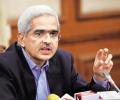
A staunch defender of demonetisation, it would be interesting to see how he handles the government's increasing demand for more cash from the RBI, and letting some weak banks get out of prompt corrective action.

RBI has sought to stop one of its firms from disposing off assets.

Whatever you do, continue to pay your loan EMIs and insurance premiums for term and health policies (not investment-based policies) on time. Then try to buy yourself some breathing space, says Harsh Roongta.

Members of Parliament, state legislatures, and local governments not eligible to be members of PSB boards

The Union Cabinet on Wednesday approved additional funding of up to Rs 3 lakh crore at a concessional rate of 9.25 per cent through the Emergency Credit Line Guarantee Scheme (ECLGS) for the MSME sector hit hard by the coronavirus crisis. The ECLGS was the second-biggest component of Rs 21 lakh crore comprehensive package announced by Finance Minister Nirmala Sitharaman last week.

The finance ministry also said the maximum funding will be Rs 400 crore for any single project that will be seeking assistance from the 'special window' for completion of the 1,508 projects comprising about 4.58 lakh units.

Bombay Oxygen Investments Ltd shares have been witnessing a particularly sharp rally for many days now and have more than doubled from about Rs 10,000 level seen in March-end and the market watchers feel the only reason for this kind of stupendous rally is the name of the company.
Defying trends, the country's largest private sector lender, HDFC Bank, has shifted its asset mix significantly towards high-rated segments. As a result, its wholesale-to-retail mix has tilted heavily in favour of wholesale, even at the cost of margins. Further, it is even looking to ramp up its branch network, with an aim to service clients within a 1-2 km radius rather than the current 5-6 km radius.
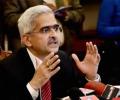
The overarching talking point will be the reluctance on the part of private banks to loosen their purse strings and increase lending substantially, even as the central bank believes there is adequate liquidity within the system.

He becomes 2nd Indian to win this award; N R Narayana Murthy won it in 2003.

'There will be partnerships between banks and fintech firms, but there will also be areas where they will be direct competitors.'

'Many of those who invested in NCD issues are those who traditionally put their money in fixed deposits...'

You will come across many a hurdle while purchasing a used car. That, however, cannot keep you away from realising your dream.

The loss of income has severely dented the loan repayment ability of small borrowers

India may adopt norms similar to the US Federal Reserve model, which regulates conglomerate-led banks in the country.

Industry fears waiver of interest on interest would distort credit culture, may encourage borrowers who can pay to defer repayment.

As share of cash volumes in trading mix sees decline, it will result in moderation of profitability from core broking operations.

According to industry players, over 50 FMPs have exposure to Zee Group companies.

Look at those offering 100-300 bps more and have good rating; it will improve your portfolio's returns.

Even erstwhile independent directors were being paid substantial remuneration including commission. The median annual salary of IL&FS employees was Rs 13.1 lakh.

Listed realty developers saddled with unsold properties worth Rs 1 trillion

The Indian financial system's asset quality improved despite the pandemic, but it could be due to special dispensations by the regulator, and banks would likely see increased stress on their books once the schemes expire. According to the annual trend and progress report of the Reserve Bank of India (RBI) released on Tuesday, the data available for this financial year so far indicate that banks' bad debts have moderated while provision coverage ratios (PCRs), capital buffers as well as profitability indicators have improved relative to pre-pandemic levels.

India's biggest non-bank finance company, Bajaj Finance (BAF), is set to raise capital after a gap of four years. On October 5, the board of directors will meet to approve the fund raise by way of preferential issue and/or qualified institutional placement (QIP) subject to regulatory and shareholder approvals. The move, analysts said, comes ahead of expectations, and could be in the wake of simmering competition in the consumer lending space, especially with the launch of Jio Financial Services (Jio Fin). "While we still do not have finer details on the game-plan of Jio Financial, it has plans to initially foray into consumer and merchant lending.

The Reserve Bank of India's (RBI's) latest order on unsecured loans is set to hit the banking sector's growth in the near-term, cautioned analysts, as they see banks slowing down on aggressive retail lending. Besides, cost of funds for non-banking finance companies (NBFC) is expected to inch up as banks will pass on higher capital charge to NBFCs. "We believe the fallout of the RBI action will be mainly on growth, given the rising dependence on unsecured retail loans and lending to NBFCs for growth.

Keep a close eye on credit quality, financials of NBFCs before investing. These instruments should not constitute more than 15 to 20 per cent of your debt portfolio.

The RBI is of the view that it cannot carry out satisfactory due diligence for granting registration because the funding is from a jurisdiction that has been identified by FATF as having weak measures to combat money laundering and terrorist financing.

If indeed the gate opens for big industrial houses, the RBI needs to be smarter than them and demonstrate it through action, not reaction, observes Tamal Bandyopadhyay.

Malvinder "forged the signatures" of Aditi Singh, Shivinder's wife, in the documents of RHC Holdings Pvt Ltd, which along with Oscar Investments Ltd jointly owned financial services firm Religare Enterprises Ltd and hospital chain Fortis Healthcare Ltd, it said.

India's corporate sector is likely to report a slowdown in revenue growth and earnings for the July-September 2023 period (Q2FY24), according to earnings estimates by brokerages, after the country's top listed companies posted higher than expected profits for the first quarter. The combined net profit of Nifty50 companies, based on brokerage estimates, is expected to have grown by 19.6 per cent year-on-year (Y-o-Y) to Rs 1.75 trillion in Q2FY24 - a sharp deceleration from 37.6 per cent Y-o-Y growth in the combined earnings of index companies in the April-June 2023 period. According to estimates, the combined earnings in the second quarter would be down 8.8 per cent on a quarter-on-quarter (Q-o-Q) basis and the lowest in the past three quarters.
Unlike bank FDs that are considered risk-free investments, NCDs do carry a certain amount of risk, primary among them is the risk of default, either servicing the interest payment or meeting their principal repayment obligations.

According to ICRA, even in a high-growth scenario, wherein the second half of FY20 sees the incremental bank credit rise to Rs 6.5-7 trn, there will still be a 40-45% year-on-year decline.

The current wage revision for PSBs, as well as some private lenders, is due from November 2017 for five years - up to October 2022.

Finance Minister Nirmala Sitharaman on Thursday said the Indian economy is witnessing a strong recovery after a long and strict lockdown. Addressing a press conference to announce more stimulus measures to boost growth, she said macro-economic indicators are pointing towards recovery. She noted that COVID-19 active cases have declined from over 10 lakh to 4.89 lakh with case fatality rate (CFR) at 1.47 per cent.

The hoarding of cash accentuated from the very start of 2020, when the coronavirus pandemic started taking hold the world over, and fear of the pandemic prodded people to remain liquid for emergency use.

The Centre has set a steep divestment target of Rs 80,000 crore for 2018-19. In the first six months, it has managed to mop up less than Rs 10,000 crore.

Varsham carries the stamp of Ranjith Sankar which is enhanced by Mammootty's presence.

Bank credit growth declined to 8.5 per cent in January from 13.5 per cent in the year-ago period.
